


31 ago $2 Deposit casino australia | fees
Understanding the true costs and constraints of $2 deposit casinos in Australia
A low deposit is easiest to judge by what it costs you to reach a withdrawal. Take a hypothetical site that accepts $2 and applies a bonus with a wagering requirement. If the bonus is $2 and the requirement is thirty times the bonus, you would need $60 in qualifying wagers before the bonus money converts to withdrawable cash. That arithmetic is an illustration, not a quoted term. Run the same calculation with the actual multiplier the site publishes and compare the result with the amount you intended to spend. When the turnover figure dwarfs the deposit, the offer is doing more for the casino than for you.
See also:
- What $2 Minimum Deposits Actually Mean
- Operator comparison: payments
- Gday77 Casino: Accepted Deposit Channels at Gday77
- Low Entry Threshold at Davinci Gold Casino
- Uptown Casino: Bitcoin Deposit Minimums
- Treasury Casino Deposit Methods
- Drake Casino Deposit Minimums
- The Hidden Costs and Limits Behind $2 Deposits
- Which Payment Methods Accept $2 Deposits
- The Offshore Reality: What $2 Deposits Don’t Include
- Practical Alternatives to Micro-Deposits
- Frequently asked questions
- Setting firm limits around a $2 casino deposit
What $2 Minimum Deposits Actually Mean
Every casino offering $2 deposits to Australians operates offshore, outside Australian regulatory oversight. The Interactive Gambling Act 2001 prohibits anyone from providing online casino services—pokies, table games, live dealer games—to people physically in Australia. No state or territory issues licences for online casinos. The Northern Territory Racing Commission licences sports and race betting, and state regulators oversee land-based venues and lotteries, but online casino products remain unlicensed and illegal to supply.
Offshore casinos hold licences from jurisdictions like Curaçao, Malta, or Kahnawake. Those licences authorise the operator in the issuing country; they do not grant permission to serve Australians. The IGA makes it an offence for the operator to offer the service, not for the individual to access it, but that distinction offers no consumer protection. When a dispute arises—a delayed withdrawal, a confiscated balance, a bonus term applied retroactively—you have no Australian regulator to contact, no ombudsman pathway, and no local court with straightforward jurisdiction.
Australian-licensed sports and race betting services do not offer $2 minimums because their product structure differs. Licensed bookmakers focus on racing and sports markets with bet minimums tied to market liquidity and account management costs. Many set deposit floors at $10 or $20. They also operate under responsible gambling obligations enforced by Australian regulators, including mandatory limits governing deposits, activity statements, and access to the National Self-Exclusion Register (BetStop). Offshore casinos face no such mandates.
BetStop, Australia’s national self-exclusion register, covers services licensed by the Northern Territory Racing Commission and state regulators. Registering with BetStop blocks your access to participating sports and race betting accounts. It does not cover offshore casino sites, which operate outside the framework. If you self-exclude from licensed services but continue accessing offshore casinos, BetStop cannot enforce the exclusion. Similarly, Gambling Help Online (1800 858 858) provides free support for problem gambling, but the service cannot compel an offshore operator to close your account, refund deposits, or honour a voluntary exclusion request.
Offshore transactions bypass Australian financial protections. Deposits to unlicensed casinos go to foreign merchant accounts or cryptocurrency wallets. If you dispute a transaction with your bank, the offshore merchant typically operates beyond the reach of Australian card scheme rules or banking codes of practice. Chargebacks fail more often than they succeed, and successful disputes can result in the casino banning your account and confiscating any remaining balance.
Casoola Casino RTP | Theoretical Returns and House Edge
Tax and Centrelink reporting obligations apply to gambling winnings regardless of whether the source is licensed. The Australian Taxation Office treats professional gambling income as assessable, and Centrelink requires disclosure of gambling winnings when calculating income support eligibility. Offshore casinos do not report your activity to Australian authorities, leaving the reporting obligation entirely with you. Unreported income discovered during an audit or review can result in debt recovery and penalties.
Are $2 deposit casinos legal in Australia?
No. The Interactive Gambling Act 2001 prohibits operators from providing online casino services to Australian residents, including pokies, table games, and live dealer games. Offshore casinos that accept $2 deposits from Australians operate without Australian licences, and accessing them does not make the service legal to supply. Australian-licensed gambling is limited to sports betting, race betting, lotteries, and land-based venues.
Can I withdraw $2 from an offshore casino?
No. Casinos accepting $2 deposits typically enforce withdrawal minimums between $20 and $50. If your balance sits below that threshold, you cannot request a cashout. The only way to withdraw is to wager the $2, win enough to cross the minimum, or deposit additional funds to reach it.
Do $2 deposits qualify for casino bonuses?
Rarely. Most offshore casino welcome bonuses require a minimum deposit of $10 to $20 to unlock matched funds or spins offered free of charge. Depositing $2 leaves you with only your deposit balance, minus fees and currency conversion costs, and no promotional value.
Treasury Casino prioritises security during the deposit process by encrypting all transaction data. Players can verify their identity through standard KYC procedures if prompted, which is mandatory for larger transactions or upon request. The interface guides users through each step clearly, reducing errors in payment details. Support is available to resolve any issues with failed deposits, ensuring that funds are correctly credited to the user’s account before gameplay begins.
Operator comparison: payments
Australian financial institutions apply inconsistent filters to gambling transactions. Westpac, NAB and ANZ frequently decline Visa or Mastercard payments linked to betting sites, while Bendigo Bank and Suncorp often process them without intervention. The operator’s advertised deposit speed becomes irrelevant if the transaction never reaches their system.
| Brand | Details |
|---|---|
| Gday77 Casino | Cards, e-wallets, PaySafeCard accepted |
| Davinci Gold Casino | Withdrawals take up to 72 hours to process. |
| Uptown Casino | Minimum AUD $10 for Bitcoin |
| Treasury Casino | Accepts standard AU payment rails with immediate processing. |
| Drake Casino | Card instant; Bank delayed |
E-wallets such as PayPal or Skrill bypass local card blocks entirely, though they require funding separately.
Gday77 Casino: Accepted Deposit Channels at Gday77
Gday77 Casino supports diverse deposit channels including credit cards, e-wallets, and cash vouchers like PaySafeCard. This variety allows users to fund their accounts using familiar financial instruments without being restricted to a single banking network.
Low Entry Threshold at Davinci Gold Casino
Davinci Gold Casino sets a minimum deposit threshold between 5 and 10 EUR, depending on the chosen payment method. This low entry point allows players to test the platform without committing significant funds. Ensure your selected currency aligns with these limits to avoid transaction rejection.
Uptown Casino: Bitcoin Deposit Minimums
Cryptocurrency transactions at Uptown Casino operate under different financial constraints compared to traditional methods. Bitcoin deposits accept a minimum value of just AUD $10. This lower barrier allows for more flexible funding options without requiring the larger sums associated with fiat currency transfers or specific promotional packages.
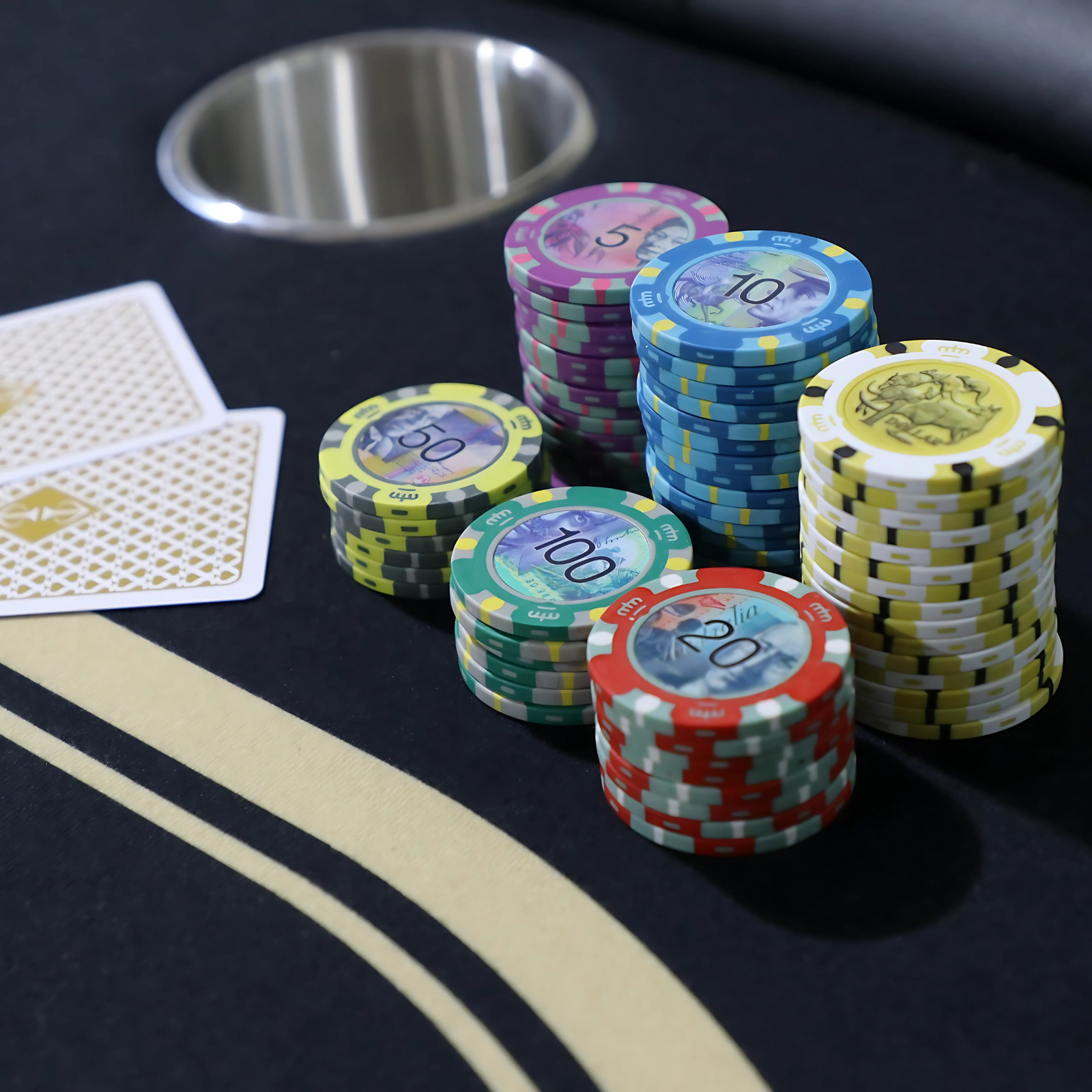
Treasury Casino Deposit Methods
Treasury Casino accepts standard Australian payment rails for deposits, allowing you to fund your account using methods common in the local market. The platform does not restrict access based on deposit size alone, provided you meet the operator’s stated minimum threshold. Processing is generally immediate for electronic transfers and card transactions, ensuring funds are available for play without unnecessary delay. Always confirm the specific currency settings on your account to avoid conversion fees.
Drake Casino Deposit Minimums
To start playing at Drake Casino, you must deposit a minimum of AUD 20 to 25. This threshold applies regardless of whether you use a credit card, bank transfer, or cryptocurrency like Bitcoin. If your account is new and unverified, this initial funding step is the only barrier before accessing games. The specific amount may vary slightly depending on the chosen payment channel, but the AUD 20 floor remains consistent for most standard methods.
The Hidden Costs and Limits Behind $2 Deposits
A $2 deposit sounds like a cheap way to test the waters. The catch is that the cost of playing isn’t just the amount you send in. Payment processors often charge flat fees, and casinos impose strict wagering requirements on bonuses tied to those deposits. If you put in $2 and get a $10 bonus, you might need to wager $300 before withdrawing anything. That’s a steep climb for two dollars.
The real hidden costs are structural. First, payment method minimums. Many e-wallets or cards won’t process transactions under $5 or $10. Second, withdrawal limits. Some sites cap withdrawals at levels that make small deposits pointless if you win big. Third, verification delays. Micro-deposits can trigger extra checks, slowing down access to your funds.
| Cost Factor | Typical Impact on $2 Deposits | Why It Matters |
|---|---|---|
| Payment Fees | Flat fees (e.g., $0.50–$1.50) consume 25–75% of the deposit | Small amounts lose value instantly before hitting the balance |
| Wagering Requirements | High multipliers (e.g., 30x–50x) on bonus funds | Requires hundreds in turnover to clear, making small wins hard to withdraw |
| Withdrawal Caps | Daily or weekly limits may block larger payouts | Even if you win, you cannot cash out quickly without escalating the issue |
These factors turn a simple transaction into a complex hurdle. A fee of $1 on a $2 deposit means only half your money reaches the casino. Then, if you claim a bonus with 40x wagering, you need to play through significant volume. For casual players, this defeats the purpose of low-stakes testing. Always check if your chosen payment method accepts such small sums without prohibitive fees. Also, verify if the site allows immediate withdrawal of deposited funds separate from bonus balances. Without these details, a $2 deposit becomes an expensive experiment instead of a gateway.
Drake Casino sets a minimum deposit threshold of approximately AUD 20 to AUD 25, making it accessible for players testing the waters without committing large sums. Accepted funding methods include credit cards, bank transfers, and cryptocurrencies such as Bitcoin. Each channel influences how quickly funds appear in the account balance, with digital assets often processing faster than traditional banking routes. Players should note that withdrawal limits vary depending on the chosen payment method and require completed account verification before any funds can be moved out.
Which Payment Methods Accept $2 Deposits
The floor sits with the payment rail, not the casino
Putting two dollars into a casino account is rarely blocked by the casino’s own deposit form. The wall is usually the payment rail: card networks, bank transfer schemes and e-wallet products each impose a minimum transaction value, and that threshold is set by the provider, not by the site taking the money. A two dollar transfer sitting below that threshold fails before the casino’s balance system ever sees it. This is why the same small deposit can be attempted five times with the identical result, and why a debit card can decline while an e-wallet succeeds for the same person on the same day.
The practical check is to look at the cashier before entering an amount. Cashiers normally list each method and the range it accepts, and where a range is shown, the bottom end is the rail’s floor. If the method you want does not appear, or the cashier offers no way to set a two dollar amount, the deposit is not available through that route. Selecting a different method with a lower floor is the usual fix, and the failure is administrative instead of a judgement about your account.
The design of a two dollar casino offer depends on this gap. A site advertising a two dollar entry point tends to steer small deposits toward rails that tolerate low values: e-wallets, prepaid vouchers, vouchers bought over the counter, or a minimum top-up that bundles the amount. One hypothetical example: if a prepaid voucher is sold in five dollar units and the casino credits the full voucher, a genuinely two dollar deposit may not exist through that method at all. The advertised number and the achievable number can differ for reasons outside the casino’s control.
What an identity check can and cannot establish
Verification is the second common stopping point, but it works differently from a method limit. A casino checks identity because anti-money-laundering and responsible-gambling rules attach to the person, not the amount, and account verification is typically tied to a person’s name, date of birth and address matching the payment instrument. Some sites run part of this check at first deposit; others allow the deposit and hold the account for review afterward. A two dollar deposit does not bypass this, and a small amount does not exempt an account from a large-withdrawal check later.
28 Mars casino | Login Steps & Email Verification Guide
That distinction matters because players often read a successful deposit as confirmation that the account is cleared. A deposit can complete while a later withdrawal’s source-of-funds or document review is still outstanding. Verification establishes that the documents presented match the registered details. It does not establish that every payment method has been approved for both directions, that a bonus will be honoured, or that a future transaction will clear. Read the cashier and account messages as a status report, and treat a completed deposit as one step, not a clearance notice.
Reading a failure message as a routing instruction
Deposit errors usually carry the reason in plain language, and the wording points to who is rejecting the transfer. A message about a minimum amount, an unsupported method or an issuer decline names the rail. A message asking for documents or account review names the casino. Treating the two as the same thing leads players to re-submit a card that will keep failing or to send documents that were never requested.
A cleaner sequence: confirm the method’s displayed range, set the amount at or above its floor, complete any identity fields the cashier displays, then act on the exact message shown. Changing the payment rail is the first move for a floor problem; supplying the named document is the first move for a verification problem. Neither guarantees the next attempt succeeds, and unknown cases should be described as unknown instead of diagnosed. The goal is to know which side has stopped you before spending more time on the wrong fix.
Every transaction must originate from an account in the player’s own name. Third-party cards or e-wallets are strictly prohibited during the funding process. Attempting to use a friend’s card will result in immediate rejection and potential account suspension, as identity verification is tied directly to the payment source.
The Offshore Reality: What $2 Deposits Don’t Include
The promise of a $2 deposit casino Australia is marketed as the ultimate low-risk entry point for Australian punters. While the financial barrier to entry is undeniably small, this pricing strategy masks a more significant issue: legality and consumer protection. It is crucial to distinguish between two entirely different categories of operators available to Australians. The first category consists of licensed Australian sports and race betting services, which are regulated under strict state and territory frameworks. The second category comprises unlicensed offshore ‘online casinos’ that offer real money pokies and table games to Australian residents in violation of the Interactive Gambling Act (IGA). When you access low minimum deposit online casinos available to Australian players through these offshore channels, you are not entering a protected market; you are bypassing the regulatory safeguards designed to prevent exactly this kind of friction.
For those who choose to proceed despite the legal risks, understanding the mechanics of these deposits is essential. The ‘$2 deposit’ label is primarily a marketing hook designed to reduce initial hesitation. In practice, it functions as a gatekeeper for high-turnover bonus structures instead of a genuine invitation to play with minimal capital. These offers are rarely standalone; they are almost always tied to welcome bonuses that require substantial wagering before any funds can be withdrawn. The low entry fee makes the bonus appear accessible, but the conditions attached often render it practically useless for casual players.
The Hidden Costs of Low-Threshold Deposits
When you make a small deposit, several hidden costs and restrictions typically apply. First, payment method availability is severely limited. Many offshore sites do not accept direct credit card deposits due to international banking restrictions and IGA compliance pressures on Australian banks. Instead, they push users toward e-wallets like Skrill or Neteller, or cryptocurrency. These methods often come with their own processing fees, which can eat up a significant portion of a $2 deposit. For example, a $10 flat fee on a $20 deposit might seem manageable, but on a $2 deposit, even a small percentage-based fee can exceed the deposit amount itself, leaving you with zero playable balance.
Second, the turnover requirements associated with these deposits are often disproportionately high. A typical welcome bonus might offer 100% match up to $500, but require a 40x or 50x rollover on the bonus amount plus the deposit. If you deposit $2 and receive a $2 bonus, you must wager $160 before withdrawing. This is mathematically difficult to achieve without losing the funds, especially given the house edge on pokies. The low deposit amount creates an illusion of low risk, but the volume of betting required to clear the bonus exposes you to the full force of the house edge.
Processing Stages and Withdrawal Delays
A common misconception is that a small deposit leads to faster withdrawals. In reality, offshore sites use the initial deposit as a trigger for extensive verification processes. Before players can withdraw any winnings, you must complete KYC (Know Your Customer) checks. This involves uploading government ID, proof of address, and sometimes even proof of payment method ownership. For small deposits, this process can take days or weeks, during which your funds are locked. Unlike licensed Australian operators who have streamlined digital onboarding, offshore sites often have manual review queues that prioritize larger deposits, leaving small depositors in limbo.
Instant Bank Transfer Casino Australia | Process
Furthermore, withdrawal limits are often structured to discourage small accounts. Many offshore casinos impose minimum withdrawal amounts of $50 or $100. If you win $20 from a $2 deposit, you cannot withdraw it until you deposit more or win significantly more. This forces you to keep playing, increasing the likelihood of losing your funds back to the house. The combination of high turnover requirements, limited payment options, and high minimum withdrawal thresholds creates a system where the ‘$2 deposit’ is less about accessibility and more about capturing user data and encouraging further spending.
Payment Method Restrictions and Fees
Not all payment methods support micro-deposits. Credit cards are increasingly blocked for gambling transactions by Australian banks due to responsible lending laws and IGA enforcement. Debit cards may work, but they often incur foreign transaction fees if the offshore site processes payments in USD or EUR. E-wallets like PayPal are rarely available on offshore casino sites due to their own strict compliance policies regarding unlicensed gambling. Cryptocurrency is becoming more common, but it introduces volatility risk; the value of your deposit can change significantly between the time you send it and the time it is credited to your account.
It is also important to note that some offshore sites charge processing fees for certain deposit methods. These fees are often not disclosed prominently and may only appear during the checkout process. For a $2 deposit, a $1 processing fee effectively doubles the cost of playing, making the return on investment negative from the start. Always check the terms and conditions of the payment method prior to paying in money, as these fees can vary significantly between providers and can change without notice.
Why Small Deposits Don’t Guarantee Faster Play
The idea that small deposits lead to faster account activation is largely false. Offshore sites often treat all new accounts equally in terms of verification, regardless of deposit size. Some even require verification before allowing any deposits, creating a catch-22 where you cannot play without proving your identity, but cannot prove your identity without accessing the site. This bureaucratic hurdle is designed to filter out fraudulent accounts, but it also slows down legitimate players. Licensed Australian operators, by contrast, have integrated verification systems that allow for rapid account setup and funding, providing a smoother experience within the legal framework.
Additionally, small deposits may trigger additional security checks. Unusual activity patterns, such as multiple small deposits followed by attempts to withdraw, can flag an account for fraud review. This can result in temporary freezes on your account while the site investigates. While this is a standard anti-fraud measure, it highlights the lack of trust offshore sites place in their customers. In contrast, licensed operators operate under strict regulatory oversight that mandates fair treatment and timely resolution of account issues.
Responsible Gambling Considerations
While offshore sites may advertise low deposits as a way to control spending, they are not required to provide the same responsible gambling tools as licensed Australian operators. Tools like BetStop, limits on deposits, and time-out periods are mandatory for licensed entities but often absent or ineffective on offshore platforms. Without these safeguards, players are more vulnerable to problem gambling behaviors. The low entry cost can encourage frequent, small bets that add up quickly, leading to unintended losses. It is crucial to recognize that the absence of regulatory oversight means there is no statutory recourse if you experience harm or unfair treatment.
If you are concerned about your gambling habits, seek help immediately. Contact Gambling Help Online at 1800 858 858 for free, confidential support. They can provide resources and counseling to help you manage your gambling behavior. Remember, the goal of gambling should be entertainment, not income, and it is essential to set strict limits on time and money spent.
Can I withdraw my $2 deposit immediately?
No, most offshore sites require you to meet wagering requirements and complete verification before withdrawing any funds. Additionally, many have minimum withdrawal limits that exceed $2.
Are there fees for depositing $2?
Yes, many payment methods charge processing fees or foreign transaction fees that can exceed the deposit amount, leaving you with little or no playable balance.
Is it legal to deposit at an offshore casino?
While it is not illegal for individuals to gamble at offshore sites, the sites themselves are prohibited from offering services to Australians under the Interactive Gambling Act. You have no consumer protection rights.
Uptown Casino adjusts its minimum deposit requirement based on the specific promotion you intend to claim. The standard welcome package activates at a threshold of AUD $20. However, accessing the 100ACES offer necessitates a higher entry point of AUD $25. This distinction ensures that players select the correct amount for their desired bonus tier before initiating any transfer.
Practical Alternatives to Micro-Deposits
Offshore casino sites advertising $2 minimum deposits target Australian punters with the promise of near-zero entry cost. The figure refers to the smallest transaction the cashier software will accept, not the net amount you can wager or withdraw. These casinos operate without Australian licensing—no state, territory, or federal regulator approves their services—and the Interactive Gambling Act 2001 prohibits operators from providing online casino games, including pokies, to Australian residents.
The $2 threshold is a marketing position. It does not include payment processing fees, currency conversion when the casino holds funds in USD or EUR, or the withdrawal minimums that prevent you cashing out anything below $20 to $50. Australian-licensed services—sports and race betting under Northern Territory Racing Commission or state regulation—do not offer online casino products at any deposit level, so every $2 casino option sits offshore.
Payment methods supporting $2 deposits are limited. E-wallets like Skrill or Neteller might accept the minimum, but their percentage-based fees consume a meaningful share of a micro-deposit. Prepaid vouchers such as Neosurf typically impose their own minimum transaction values, often $10 or $15, which overrides the site’s advertised floor. Cryptocurrency may permit smaller amounts where network fees allow, but conversion costs and wallet minimums add friction. Credit and debit cards rarely process transactions below $5 to $10 due to issuer thresholds and merchant processing rules.
The word ‘minimum’ describes only the site’s cashier setting. It excludes the cost of getting money in, the balance required to qualify for a bonus, the threshold needed to trigger a withdrawal, and the verification process that delays your first cashout regardless of deposit size. A $2 deposit might clear, but after a $0.50 processing fee and $1.20 consumed by an unfavourable exchange rate, the usable balance for wagering shrinks to thirty cents.
At Gday77 Casino, funding via e-wallet or card takes seconds, while PaySafeCard requires entering a 16-digit code manually. The delay is negligible, but the extra step reduces input errors common with long card numbers.
Frequently asked questions
Why did my $2 deposit disappear without a confirmation receipt?
Payment gateways sometimes process micro-transactions with slight delays, leaving the balance updated but no immediate email trigger. Check your bank statement for the pending charge first. If the funds have left your account but haven’t credited to the casino wallet after ten minutes, locate the transaction ID from your banking app. Provide this specific reference to customer support instead of just stating the amount. This allows them to trace the exact payment attempt across their processor logs and manually credit the balance if the system failed to sync automatically.
Setting firm limits around a $2 casino deposit
A low entry cost does not make a game harmless. The risk lies in frequency. Depositing $2 repeatedly feels negligible, yet it adds up quickly. Use the self-exclusion scheme BetStop if you find yourself unable to stick to a planned budget. This national register blocks access to participating online casinos across Australia. Remember, no strategy guarantees profit. If chasing losses becomes tempting, stop playing immediately and call Gambling Help Online on 1800 858 858 for confidential advice.
Desculpe, o formulário de comentários está desativado agora.